packaging · Aug 27, 2026
On Restraint in Packaging
The luxury box that says the least usually says the most. Notes on foil, tissue, weight and the discipline of stopping one decision early.
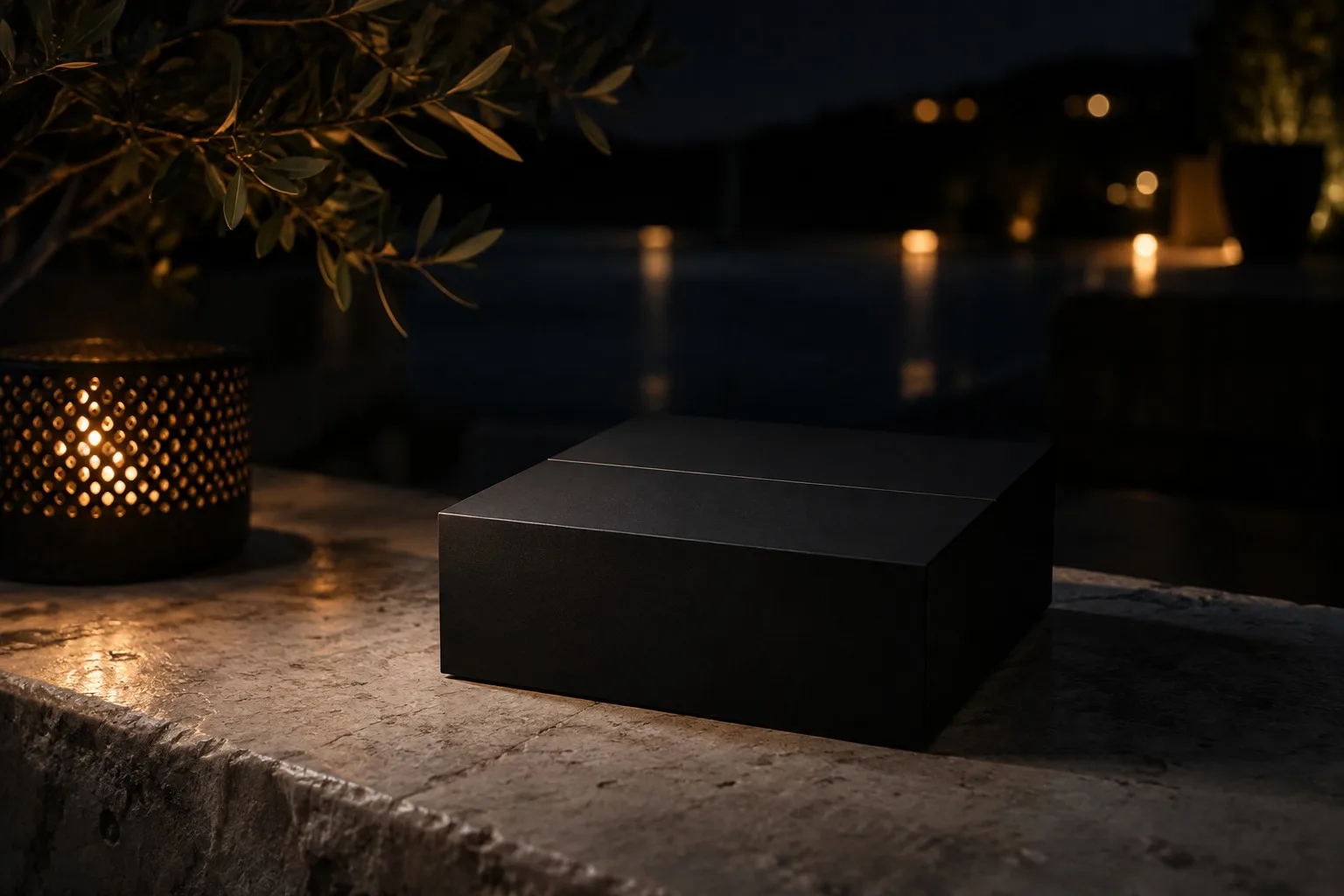
There is a point in every packaging project where someone suggests adding something. A foil. A ribbon. An insert with a thank-you note. It is almost always a good idea, and it is almost always wrong.
The temptation
Luxury is easy to confuse with more. More layers, more finishes, more things to unwrap. The reasoning feels sound: if the customer is paying a lot, give them a lot.
But what a person feels, opening a good box, isn't quantity. It is attention. They sense that someone considered each decision and made it carefully. A box that does ten things is a box where nobody decided.
What we do instead
We set a budget of decisions, not money. Three, usually. Three things the box is allowed to do. For a recent project those were: a heavy matte stock, one embossed line, and a lid that closes with a slow, soft drag of air.
Everything else is plain. No foil. No ribbon. No printing on the inside, which frightened the client until they held it.
Weight and sound
People judge packaging with their hands and their ears before their eyes. A lid that clicks tells the story of cheap plastic. A lid that settles slowly tells the story of care. We spend days on that second noise, tuning the fit of the lid against the base by fractions of a millimetre.
Weight does similar work. Rigid board, wrapped by hand, gives the box a presence out of proportion to its size. You feel it before you see it.
A few small rules
One finish per surface. Emboss or foil, never both.
Honest paper. If the stock is textured, let it be seen.
No decoration on the inside. The product should be the surprise.
Quiet colour. One colour for the box, a second only for the tissue.
None of these is original. They're the sort of rule you learn by breaking them.
The last decision
The hardest skill in this work is stopping. A box is finished when removing the next thing would hurt, and not before. We try to stop one decision early, then leave the project overnight and look at it with a clear head.
Nine times in ten, the morning is kinder to what we left out.
If you're briefing someone on packaging, ask for fewer things done well. Ask what they would cut. A studio that can answer that is worth hiring.
We had a client tell us the box was "almost too plain". We said almost was the aim.
Keep reading Firefly Studio
New essays delivered when ready. One short email a month, never more.